


Sup! 👋
It’s been a few weeks since I last posted on here.
Don’t worry, I didn’t get the Substack blues or was demotivated. I actually moved!
From Vienna to Dubai, to be exact. And before you ask, yes, I’m fine. The situation has calmed, and yes, the weather is that hot.
Anyway, with the personal stuff out of the way, let’s focus on today’s topic.
There is now a growing trend online, with media brands popping up left, right, and center.
What may seem like a phase or just people vibing is actually a much more interesting phenomenon…
PS: If you enjoy this newsletter and believe your friends or family would too, a recommendation would be greatly appreciated!

Everybody with anything to sell online is a publisher first, business second.
This is not a statement from one of the online gurus trying to sell you a course, but rather a fact.
If you don’t believe me, look at who’s been writing the cheques lately.


Source: X
A 19-month-old livestream was acquired by the world’s most valuable AI lab. That’s the bit you should sit with for a moment.
In April, OpenAI bought TBPN, the daily three-hour tech show hosted by John Coogan and Jordi Hays.
The terms weren’t disclosed, but TBPN reportedly pulled in around $5M in 2025 ad revenue and is on track to clear $30M this year.
Not bad for two former founders shouting into a camera from what they call the “TBPN ultradome.”
The show now reports to Chris Lehane inside OpenAI’s strategy org. He’s the guy who runs the crypto super PAC Fairshake.
Editorial independence has been promised, naturally. Whether TBPN ever takes a real swing at, say, Anthropic going forward, that’s the question worth watching. Anyway.
Source: YouTube
The Europeans, by the way, are already on it. ETN, short for European Technology Network, was launched in late 2025 by Ronan Chambers and Luke Knight, right after TechCrunch Europe and The Next Web both folded.
It raised €171K at a €1.1M+ valuation, and now streams twice a week on X and YouTube.
Their pitch was almost too simple: TBPN works in the U.S., Europe needs the same vibe, go.

Source: X
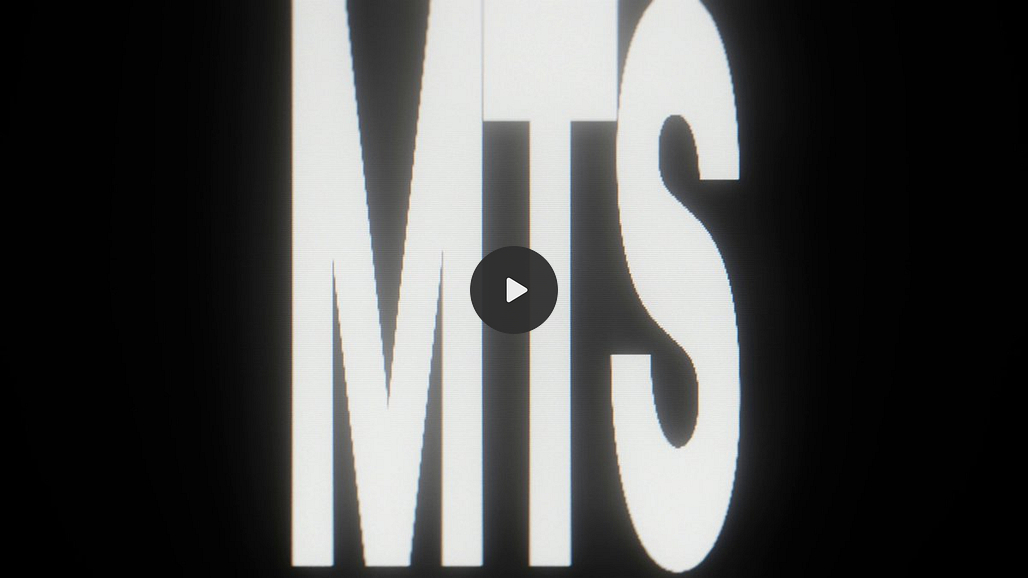
Meanwhile, MTS, or Monitoring The Situation, just got backed by a16z.
It’s a 24/7 livestream on X covering tech, business, politics, and culture in real time.
A direct successor, in spirit, to what cable news was supposed to be before it became eight people yelling about Trump tweets.
That’s just the livestreaming segment of new media ventures. You will also find other veterans who jumped off the ship.
Taylor Lorenz left the Washington Post in October 2024 and launched User Mag on Substack.
Her reasoning was blunt: legacy institutions can’t cover the internet, and the people running them don’t understand the world she covers.
She is far from alone.
Casey Newton runs Platformer.
Matt Taibbi runs Racket News.
Ben Smith co-founded Semafor.
Bari Weiss launched The Free Press.
The boldface bylines have figured out the math.
Why split your earnings with a dying masthead, when you can own the audience, the email list, and the upside yourself?
Substack is the new Condé Nast, except the writers actually keep the cheque.
The VCs have noticed too. In November 2025, a16z published an essay called “What is New Media?” and announced a dedicated media team, plus an 8-week fellowship to train creators who can drop into portfolio companies for launches and timeline takeovers.
Marc Andreessen’s basic argument: the press is unfair and ignorant, so we’ll just hire our own.
You can disagree with that worldview. You can find it slightly ominous.
As a former journalist, I find it childish that he doesn’t have the guts to speak up or clarify what is reported wrongly.
Source: YouTube
But you can’t really argue with a16z’s results.
The firm grew its AUM from $2.7B in 2011 to over $90B today, while largely refusing to take calls from journalists.
A16z is also listed twice on the TBPN New Media Map. They’re not subtle about it.
Here’s where most people still get this wrong, and why I keep banging on about it.
Social media used to be a distribution channel.
You wrote the article on the website, then you dropped the link on X or LinkedIn so people would click through.
That game is over now.
X, YouTube, Substack, LinkedIn, TikTok, those are not distribution anymore.
They are the product.
The actual front door of your business now lives on someone else’s feed, and the homepage of your website is mostly a courtesy.
Which means if you’re building anything online, a Bitcoin brokerage, a SaaS tool, a fund, a one-person newsletter, you should be designing for the feed first, the website second.
That is the media-brand-first mindset. Not “we have a content strategy.” Not “we’ll boost it on socials.”
The show is the company, and the company is the show.
Optimize 100% for the feed you’re betting on, or get out of the way.
Anyone still treating their X account as a glorified RSS feed is already losing.
And this is the key point I’m trying to make here. For over 10 years, I have been saying that social media and the wider web have the skillset to replace legacy media models.
What was missing was viewer demand. Now that this is here, more and more industries (including those that previously had no touch point with the media) are actually following up and stepping into the ballpark.
And it’s not just big companies. Independent media, independent journalists, and independent content creators are following that pursuit as well.
Whether that will lead to a new industry or to the same stuff, just differently packaged, we shall see.

OK, I admit it, I went a bit on a rant here and wrote more than I thought.
Sorry about that…
But there was even more happening this week, and as always, I will list them below.
Here are the Tabs Worth Opening:
Apple didn’t see the AI push for the Mac Mini coming: To say that Apple thumbed its nose at the AI race is an understatement. But it seems like they’re winning or taking something out of it all at least, by selling the hardware. Shockingly better than anticipated…
Anthropic’s latest evaluation of $900B+ is on the table: The makers of Claude seem to continue their push forward. From new products such as Claude Design, to a new LLM release with Opus 4.7, and now a new evaluation with a potential round of $50 billion.
There is an alternative to GPS, and it’s worth $5B: ZaiNar is a US startup that turns existing wireless networks into a hyper-precise location and timing layer for the physical world. With this, it’s a direct competitor to GPS, and it seems like it’s worth a dime. $5 billion to be exact.
Boston Dynamics is losing management people: One of the most hyped robotics startups of the last decade seems to be struggling and losing C-suite people. They’re following the CEO, who retired in February, followed by the CTO and CSO. Will they be replaced soon? Only time will tell.
Founders Fund doubles down on Anduril: One of the most innovative military-industrial companies is expanding rapidly and seeking new capital. They didn’t have to look much further than Peter Thiel and his Founders Fund, who committed another big chunk of money for war drones.

And that’s a wrap for the ninth full issue of Internet Native Capital.
Usually, I write a bit more in-depth about a particular story or news update.
This week was more of a list of things happening, and the new objective for brands to become media hubs.
I hope you liked it. Starting next week, we will be back on the regular schedule.
See ya!
Love etn. Those guys rock
openai buying a 19-month-old livestream is kinda insane when you think about it lol. thanks for the article!