


Sup! 👋
I turned 30 yesterday, and I can already feel certain things starting to annoy me. Maybe one of the perks of getting older…
One of these things is crypto and prediction markets. And speaking of crypto, it’s currently not a great time to be in the ecosystem.
The entire sector has taken a nosedive, with Bitcoin dropping over 45% from its all-time high, to Ethereum and other popular coins going down the drain even more.
It seems like the hype that kept the space alive (ICOs, NFTs, ETFs) has vanished, and there isn’t much else left that brings the masses to it.
Well, there are two things: Stablecoins and prediction markets, aka gambling.
Polymarket and Kalshi seem to be the big winners out of this development so far, and they’re partnering up with some of the biggest brands out there to let people gamble their savings away.
Today, I want to break down what’s going on and whether there is actually another use case for crypto or if this is just pure stupidity.
PS: If you enjoy this newsletter and believe your friends or family would too, a recommendation would be greatly appreciated!

Polymarket or Kalshi may have popped up on your radar in 2024.
It was one of the platform’s screenshots that circulated widely before the U.S. election, showing Trump at good odds of being declared the winner in November.
A few months later, the bets on the election were proven correct, against all odds from election experts.
I also find the founders’ backgrounds behind these platforms fascinating.
It was all about making a mark, becoming a big name like Mark Zuckerberg, and not using crypto to improve the experience.
Watch this video below to understand Polymarket’s rise:
Source: YouTube
Ever since the 2024 elections, VCs, crypto enthusiasts, and degens online have been shouting about prediction markets.
Actually, they invented a new term for gambling, because let’s face it, this is degenerate gambling.
This way of using crypto (you mainly need a wallet with coins in it to place bets) has emerged as a new “fascinating” use case.
Fans of prediction markets will argue that you have a financial incentive for each person’s voice, and it’s as close to democracy as we can imagine.
And you know who these marketing claims (take it from someone who works in marketing for a living, and someone who can differentiate noise from signal) speak most to?
Bingo, legacy media companies!
With popular podcasts or shows now featuring tickers below for the biggest bets on each platform, it seems like society is already used to it.

Source: Wall Street Journal
As you can see, Dow Jones is already partnering with Polymarket, along with CNN and CNBC, with Kalshi.
All of these media outlets and large companies have realized that prediction markets are super sticky and keep people hooked on the latest news.
From betting if Jesus is making a return this year (no joke, this is a bet on Polymarket), to Trump being impeached or Jeffrey Epstein still being alive.
Every single one of these bets is attracting millions, if not billions, in capital, all with the hope of people making an extra buck.
Naturally, this is the latest hype cycle, and it will eventually flatten.
However, it’s currently the only use case, aside from stablecoins, where a large group of people engage with crypto.
But it’s not in the way crypto purists envisioned the world over ten years ago.
Rather than challenging or improving the existing financial system, this crypto use case simply leverages existing infrastructure and improves it by 30%.
Transaction costs are lower, and it’s easier to bet on something with one click, rather than entering your credit card and then executing the command.
In the end, at least I think, it’s a sad reality of what was once a promising vision, and even worse, it gets people hooked on one of the most addictive drugs out there.
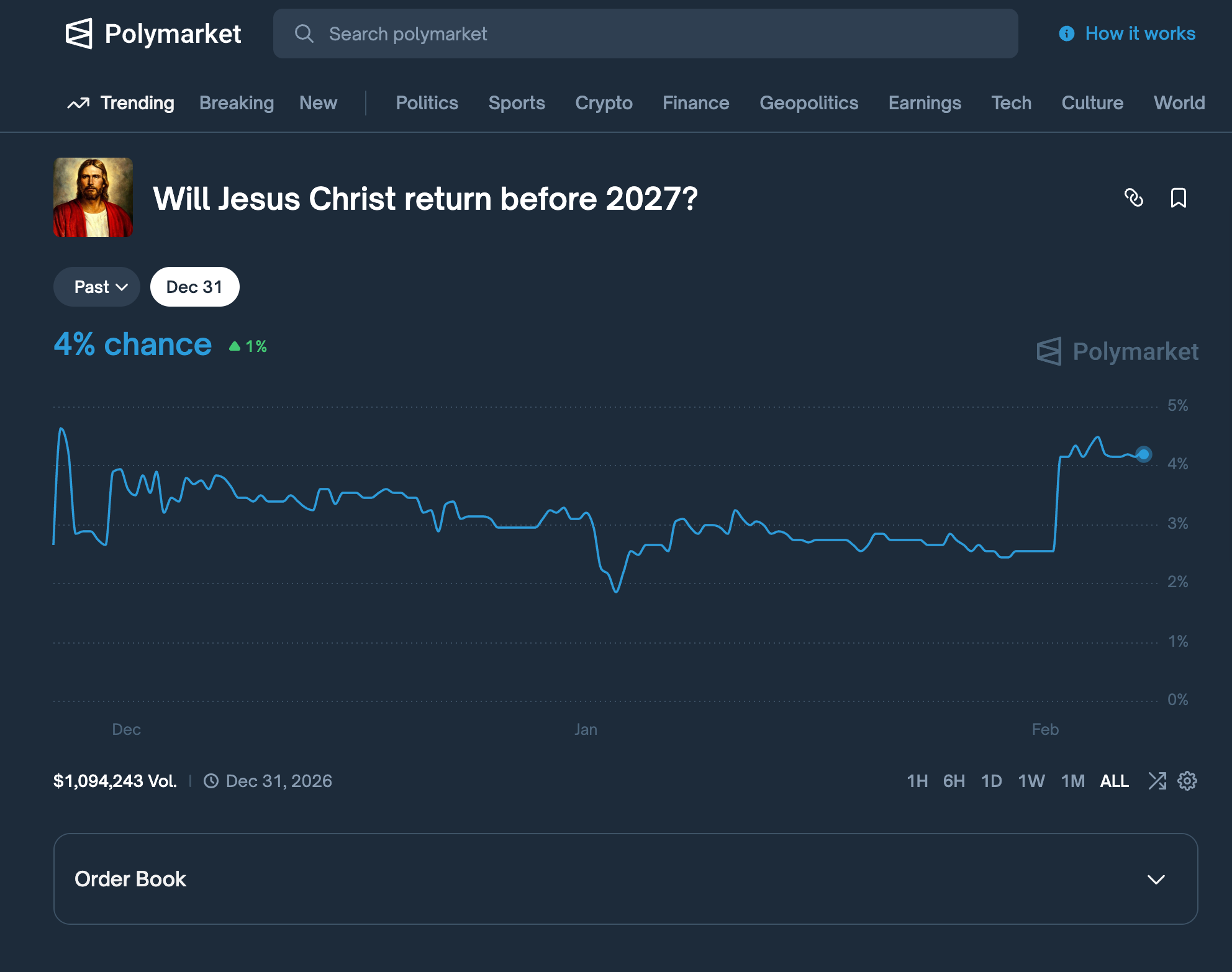
Source: Polymarket
Who knows, maybe I’m too pessimistic and don’t see the whole picture.
The only thing I like about prediction markets is getting a feeling across the board and seeing what specific communities are thinking.
But for now, this feels like more of a distraction, rather than an actual improvement to what the world could be.
At the end of the day, you can also vote for free on key events. There doesn’t have to be a gambling factor there. Because the moment people can go overboard, things usually become nasty.
Or maybe the underlying idea of democratic voting could be implemented in a different way. Rather than monetary votes, it could be a utility token.
Either way, here is the latest and greatest in crypto. Let’s hope I’m wrong and nobody gets into too much debt.

In addition to prediction markets, there has been a lot of interesting news and events this past week.
The following pieces or links are Tabs Worth Opening.
Sam Altman is furious about Claude’s ads: In case you missed it, Claude has released some ads, and it’s the modern version of a diss track. Sam Altman seems annoyed by it and has shared some of his thoughts in this interview.
AI wiped out over $400 billion this week: It was earnings season this week, and it seemed like the mega CAPEX by Big Tech was too much for the market, especially for software companies to take.
Bitcoin fell over 45% from its all-time high: As someone who works at a Bitcoin brokerage, I had a stressful week with a lot of selling and hysteria. Here is an excellent breakdown about what happened and where Bitcoin is going next.
Are AI lawyers coming in the form of agents?: This Techcrunch piece breaks down how all AI agents are currently improving drastically, and that basic law tasks, aka paralegal work, can already be automated.
AXIOS’ CEO argues that we should always think like a startup: Jim VandeHei made an interesting video about his mindset and why every company should be in startup mode. Maybe this is the new founder mode we heard about last year…

And that’s a wrap for the fifth full issue of Internet Native Capital.
It may have been a rant, mainly about how stupid I find the whole prediction market aspect, but I still hope you enjoyed it.
I definitely liked looking into these things and falling down new rabbit holes that I may pick up in future articles.
Until then, I wish you a great start to February and hope the cold winter days are soon a thing of the past.
See ya!
prediction markets aren't the use case crypto dreamed of but at least people are actually using the infrastructure