


Sup! 👋
In today’s issue, I want to focus on the Warner Bros. and whoever is acquiring them saga.
Not because there aren’t enough stories about the whole matter (let alone with the side stories, you can write an entire book), but because it teaches us a lot about content knowledge.
Additionally, it was the perfect X shitshow, with many VCs or close buddies of theirs actively involved in trying to close the deal.
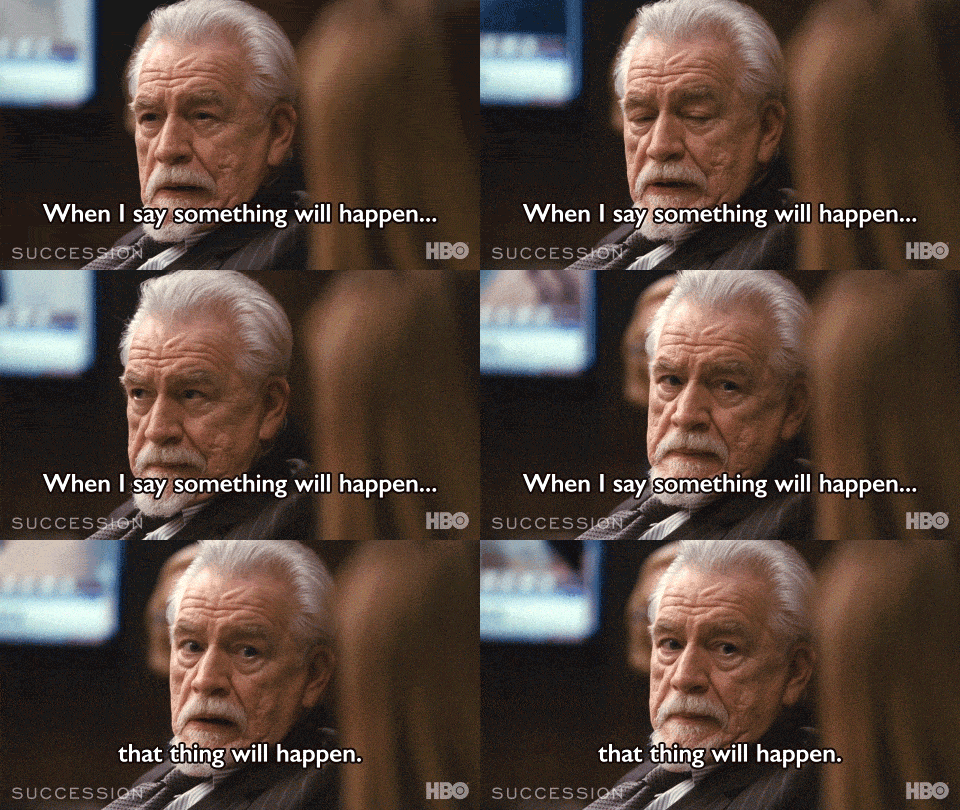
It was, or still is, the real-life version of HBO’s (ironic, I know) Succession, where too many memes and clips were shared in an effort to explain the deal.
With that in mind, let’s dive into the whole thing and figure out what else has been going on the Internet.
PS: If you enjoy this newsletter and believe your friends or family would too, a recommendation would be greatly appreciated!

Netflix won.
That’s the short version of the Warner Bros. Discovery saga that’s been unfolding since September, but the long version is way more entertaining.
David Ellison’s Paramount, fresh off an $8 billion Skydance merger, launched a hostile $108 billion takeover bid to snatch Warner away from Netflix’s $72 billion deal.
Warner Bros. told them to pound sand on 17 December, calling the offer “inadequate” and questioning whether Larry Ellison’s revocable trust would actually fund it.
Even Jared Kushner’s investment fund backed out, and he’s the first guy to pull the trigger when it comes to deals like this!
Therefore, the more logical move was to go with Netflix and get rid of all the toxic assets on Warner Bros. ' balance sheet.
However, there is one detail to note: the Internet-native company, Netflix, won, while a legacy studio like Paramount lost out.
So in short.
The Streaming Wars Are Over, and Legacy Media Lost!
These legacy media companies are scrambling to merge because they’re getting demolished by the very companies they’re now begging to acquire them.
The irony is almost too perfect.
Disney, Paramount, and Warner Bros. spent decades building monopolies through vertical integration and crushing competition.
Now they’re being vertically integrated themselves by tech companies that actually understand how people consume content.
The internet didn’t care about your cable bundles, and consumers definitely didn’t care about your 47 different streaming services.
Which is why Netflix is the better play! It actually knows what it’s doing.
They’re buying Warner Bros. Studios and HBO Max because they want the content library and production capabilities, not because they’re desperately trying to stay relevant.
Netflix focuses purely on streaming.
They’re not trying to manage dying cable networks or pretending linear TV has a future.
Paramount’s bid would have combined two struggling legacy media empires, each carrying billions in debt.
That’s not a growth strategy; it’s simply rearranging deck chairs on the Titanic.
Netflix gets HBO’s prestige content and Warner Bros.’ theatrical pipeline without the baggage of CBS or the Discovery Channel.
It Could Have Been Worse!
At least with Netflix winning, we don’t have to deal with another streaming service.
Can you imagine if Paramount had won?
We’d probably be looking at “Paramount+ Max Discovery” or whatever nightmare combination they’d come up with, forcing you to subscribe to yet another platform to watch Succession reruns.
The media consolidation is happening either way; let the company that figured out streaming a decade ago run the show.
Better than watching two billionaires play acquisition chicken with shareholder money while pretending they’re saving American media institutions.

Next to the entire Warner Bros. story, there is also a lot more happening.
The following pieces or links are Tabs Worth Opening.
The Bitcoin Core vs. Knots debate and why you should run your own node: Sun is an excellent privacy and security researcher. He’s also an avid Bitcoiner, and I think he gave a nuanced take on the Core vs. Knots debate a few months ago.
Claude launched a browser extension to automate everything: The whole browser automation with AI is growing rapidly. Anthropic is jumping on the bandwagon as well. Before you try, be careful with prompt injections!
Waymo taxis stood still, and an SF blackout is the reason why: I’ve sat in a Waymo in June this year, and I have to say, it’s so funny to ride in them. But I also thought, what if the lights are out? Seems like I was ahead with my thought, as this is precisely what happened this week.
Mt. Gox’s former CEO is making a comeback with bold claims: Some Bitcoin gossip as well! The former CEO of Mt. Gox, you know, the Japanese exchange that almost broke Bitcoin, is back with an explanation as to why the exchange went bust. It’s pretty vague, but a good read!
Andrew Ross Sorkin’s new Book “1929”: I’ve gotten this book as a gift, and I absolutely love the detailed outlook on the 1929 stock market crisis, which sparked the Great Depression. Highly recommend it!

And that’s a wrap for the first full issue of Internet Native Capital.
As you can see, it’s quite a lot with many moving parts. But I really enjoy recapping what’s going on currently and showing the ins and outs of the interwebs.
Next up will be a deep dive into Bitcoin developers’ identity crisis and what it means for the industry.
Until then, have a great one!
See ya!
I wish this newsletter and its author every success, wide distribution, and a constant stream of exciting new ideas and projects to report on. Happy new year, Joel 💫🎉🌻